
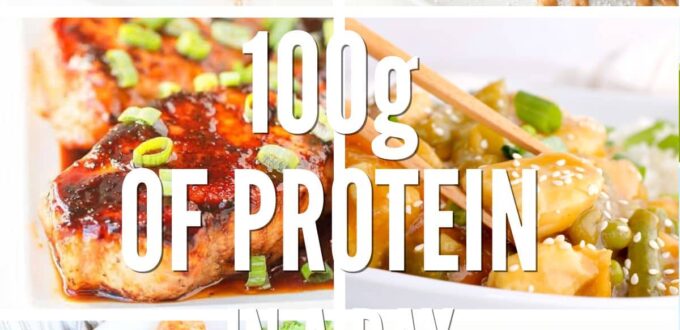
How do you meet your daily protein requirements? I’ll break down how to figure out how many grams of protein per day you need, plus ideas to hit those protein goals while eating clean on a budget.
Hitting your protein goals is trendy these days, but before you can even hit that goal, you need to figure out what to aim for.
How much protein should I eat?
The National Institutes of Health (NIH) database says a person needs 0.36 grams of protein per pound of body weight to keep them alive (according to studies done in the 1980s on young males).
The NIH also states that, “… higher intakes are often recommended to optimize specific health outcomes… many adults may benefit from protein quantity, quality, and distribution beyond guidelines currently defined by the RDA.”
Which means that many people might benefit from including a higher amount of protein in their diets.
That optimal range can fall anywhere from 0.8g to 1.2g of protein per kilogram of body weight (0.36g to 0.5g per pound), and it depends on your age, activity, food preferences, hormone levels, and a whole bunch of other things…
But a good starting place for how much protein you should consume is 1g of protein per kilogram of body weight (about 0.5g per pound), or ideal body weight if you are overweight.
For our purposes today, we’re going to aim for 100 grams of protein per day.
How do I meet those daily protein requirements?
By including a main protein source at every meal, breaking down your protein requirements into smaller goals, and intentionally choosing protein-rich whole foods, you’ll be able to get the protein intake needed daily along with all the other important nutrients your body needs.

HOW TO MEET YOUR DAILY PROTEIN REQUIREMENTS
Your first step to help meet your daily protein requirements is to take your daily protein goal and divide it by the number of meals you eat every day.
For example, if your protein goal is 100 grams and you eat 3 meals a day, 100 / 3 = 33. Your goal is to eat 33 grams of protein at every meal.
I do this for all of my clients when they sign up for coaching, and it completely changes the tone and outlook of hitting protein goals. Instead of looking at some massive number that seems out of reach, they see a smaller portion of that goal, making it much more achievable!
Here are a few other ways you can plan ahead to help you eat more protein overall:
- Front-load protein at breakfast (more than ⅓ of your daily total, up to ½)
- When you plan your meals, plan the protein first.
- When you put food on your plate, dedicate ¼ of the plate/bowl to protein.
- Make sure every meal has a main protein source. Meaning, you can look at your plate and say, “this food” (i.e. chicken, beef, yogurt, etc.) is my main source of protein.
- Include multiple sources of protein in your meals. For example, chicken might be your main source, but beans, quinoa, or nuts might add to the protein total too.
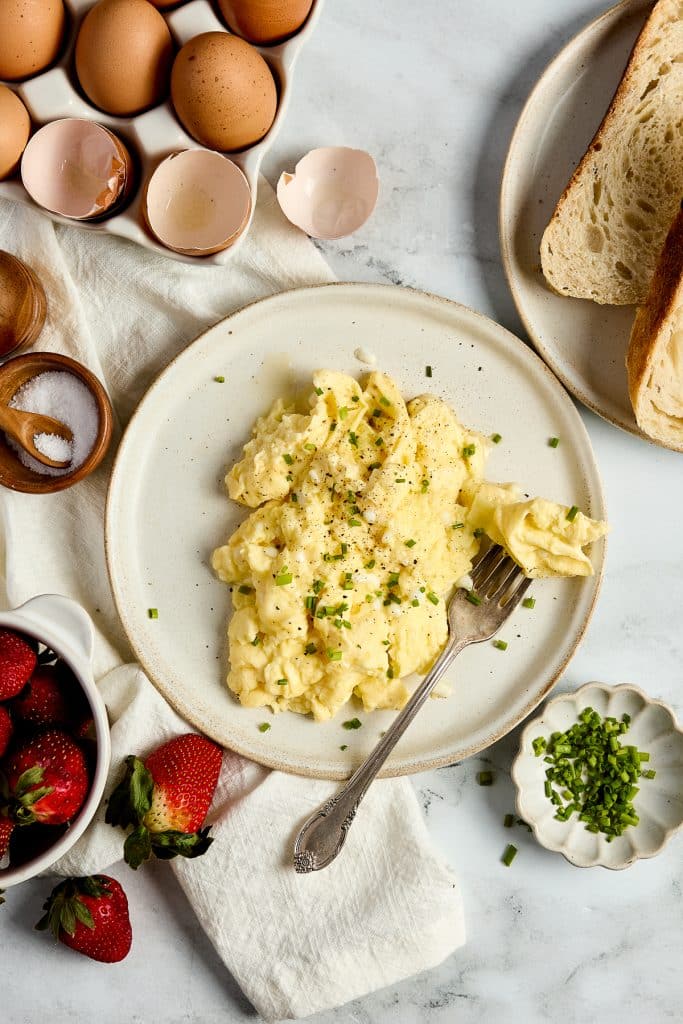
30 GRAMS OF PROTEIN BREAKFAST
So, if we want to start the day strong, we need at least 30 grams of protein breakfast ideas.
This might look like 3 eggs + egg whites + side of fruit = about 35g of protein.
Or it might be a combination of breakfast foods that are based around protein.
While on their own, these won’t quite get you to 30 grams of protein, combining them will.
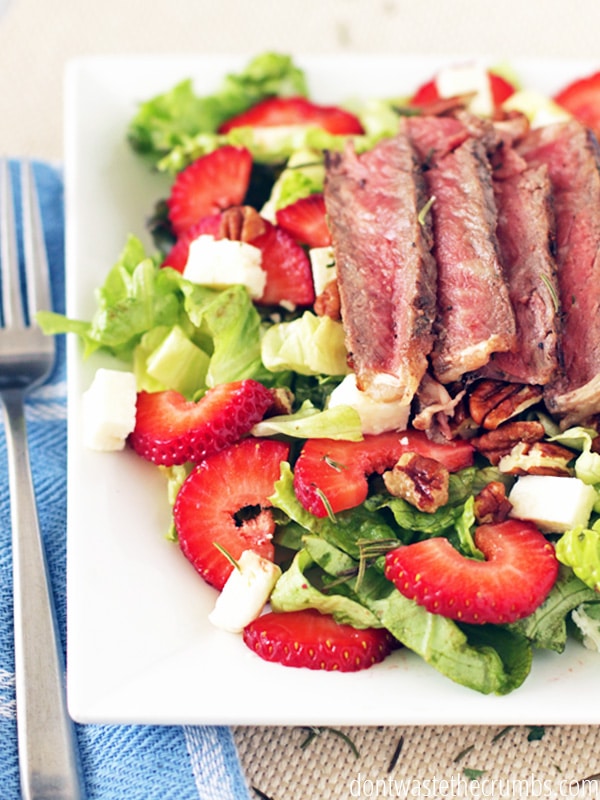
HOW TO GET 100 GRAMS OF PROTEIN A DAY: LUNCH AND DINNER
As we continue to think about how to get 100 grams of protein a day, we move on to lunch and dinner. You might have more ideas for these meals than for breakfast, but remember to start by identifying your main protein source and building from there.
Lunch might look like 5 oz of grilled chicken + a big salad with veggies = about 40g of protein.
Dinner might be 5 oz of lean ground beef + roasted vegetables = about 30g of protein.
Or try one of these protein-packed meals:
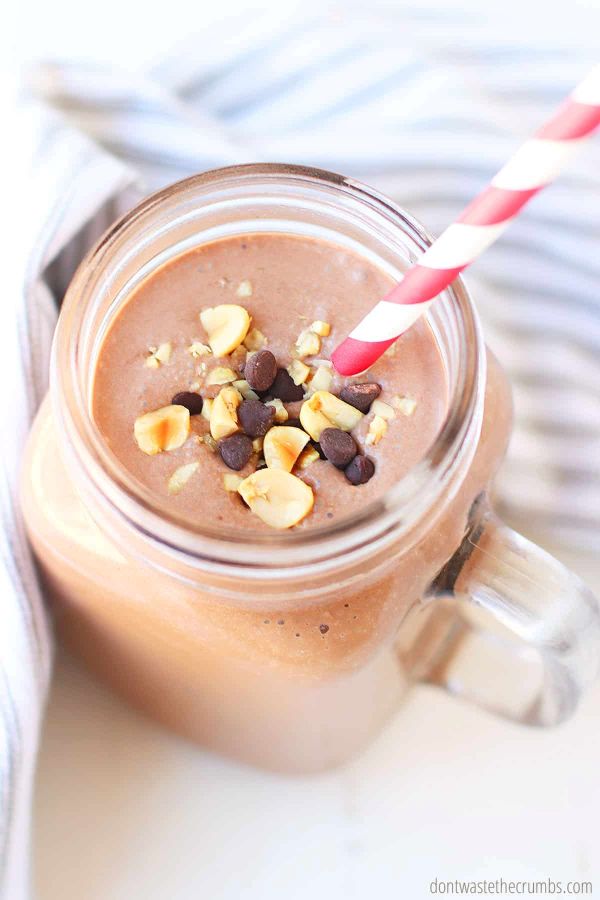
SNACKS FOR DAILY INTAKE PROTEIN
If you’ve been keeping track of your daily intake protein, 3 meals with at least 30g of protein means we’re up to 90g. Snacks can easily give you another 10-20g of extra protein.
Snacks should look like a mini meal with all of the macronutrients – protein, carbs, and fat. When you reframe it this way, the need for “protein snacks” disappears.
Instead, you’re simply eating the same type of protein you’d eat at any other meal, just in a smaller portion. Even if you need things “on the go,” pack your snack like you would pack a lunch.
- Half sandwich instead of a full
- 2 egg white bites instead of an omelet
- Single serving of yogurt with berries
- Cottage cheese or tuna with crackers
- Homemade Protein Shakes
Can you buy meat sticks? Or protein cookie dough? Or protein chips? Of course you can. But you’ll be more satisfied and save money if you stick to whole foods. And you’ll be surprised at how real food nutrition helps keep your overall macros and calories in a healthy range!
SOURCES OF PROTEIN FOR WOMEN
Your protein should come from whole foods whenever possible – lean meats, low-fat or fat-free dairy, and plant-based foods that are naturally higher in protein. Even whole grains have a fair bit of protein!
You can supplement with protein powders, bars, and shakes, but my personal recommendation is to limit these to one serving total per day (i.e. one shake OR one bar, not one of each) and to not make supplements a “staple” in your day-to-day diet at home.
Protein supplements often contain artificial ingredients and sweeteners that can cause digestive distress. They also don’t provide the same level of satiety as whole foods do (meaning they don’t fill you up as much).
No weird foods. No eating 8 chicken breasts. No protein bars every two hours.
Just meals built around protein first!
HOW MUCH PROTEIN PER DAY FAQS
How much protein per day do I need?
Aim for around 1g per kilogram (about 0.5g per pound), but keep track of how you feel and adjust the amount as needed.
How much is too much protein?
While digestive issues like nausea, diarrhea, and constipation can happen when people consume large amounts of protein supplements, I haven’t had any clients who have experienced negative symptoms from consuming too much protein from whole foods – the only negatives come from eating too little.
The only exception to eating too much protein would be those who are predisposed to kidney disease. They should talk to their doctor before increasing their protein consumption.
How much protein should I consume to lose weight?
Not eating enough protein makes fat loss feel harder than it needs to. Protein helps keep you satiated and control your cravings. While the amount needed varies from person to person, if you’re not losing weight, you may not be eating enough protein. Read more about eating healthy and losing weight here.
MORE ABOUT PROTEIN

High Protein Recipes on Repeat
Download the top 15+ recipes that are on repeat in my house, making it easy to feed my family AND meet my protein goals!
No Comments Yet